



Mashatile Calls on Traditional Leaders to Drive Rural Development and Restore Human Dignity
“As leaders of our people, mostly in rural areas, you stand at the forefront of rural renewal, advocating for investment in agriculture, infrastructure and education,” the Deputy President said.
- Country:
- India
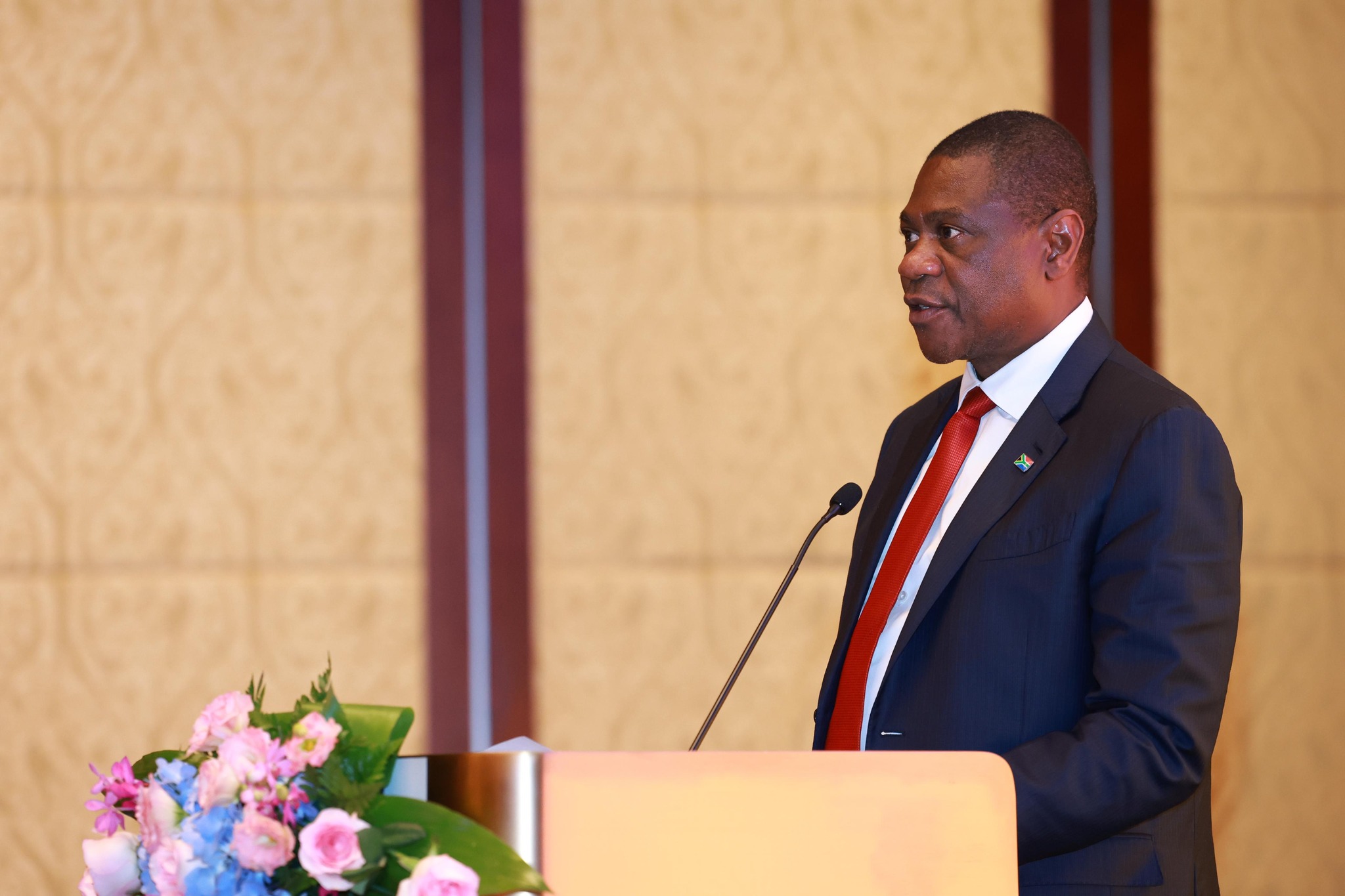
Deputy President Paul Mashatile has called on South Africa’s traditional leaders to become active drivers of rural development, socio-economic transformation and service delivery accountability, declaring that traditional institutions must play a central role in addressing the country’s most urgent challenges.
Speaking during the 191st Anniversary Commemoration of King Hintsa kaKhawuta in the Eastern Cape on Tuesday, Mashatile said traditional leadership in a democratic South Africa should not only preserve cultural heritage, but also champion economic inclusion, infrastructure development, youth empowerment and social justice.
The commemoration honoured King Hintsa kaKhawuta, the revered Xhosa monarch who was assassinated by British colonial forces on 12 May 1835 during the Frontier Wars after leading resistance against colonial expansion and land dispossession.
Addressing traditional leaders, government officials, community members and dignitaries gathered for the ceremony, Mashatile drew powerful parallels between the historic resistance against colonial domination and the modern struggle to improve the living conditions of rural communities.
“We gather here with a clear and urgent task before us: to advance land rights and socio-economic development, to strengthen traditional institutions, to invest in infrastructure and skills, to promote nation-building and unity, and to finalise the policy and legislative reforms that our people have long awaited,” Mashatile said.
Traditional Leaders Must Help Tackle Rural Challenges
Mashatile stressed that traditional leaders remain critical pillars of governance and development, particularly in rural communities where millions of South Africans continue to face poverty, unemployment, infrastructure backlogs and inadequate municipal services.
“As leaders of our people, mostly in rural areas, you stand at the forefront of rural renewal, advocating for investment in agriculture, infrastructure and education,” the Deputy President said.
In one of the strongest parts of his address, Mashatile openly criticised ongoing failures in municipal service delivery, warning that poor governance undermines the dignity of citizens.
“We cannot ignore the cry of our people when municipalities falter. When taps run dry, when roads remain broken, and when housing projects stall, these are not mere service delivery failures. They are violations of human dignity,” he said.
The Deputy President called for stronger collaboration between municipalities and traditional councils to accelerate rural development and ensure communities receive basic services efficiently.
“These challenges do not diminish traditional leaders’ relevance. They call us instead to strengthen collaboration between Traditional Councils and Municipalities, to ensure that service delivery is not delayed, and to ensure that the dignity of our people is not denied,” Mashatile said.
Renewed Focus on Land Rights and Policy Reform
Land reform and rural economic development emerged as central themes throughout the commemoration, with Mashatile urging traditional leaders to actively shape policy debates affecting rural communities.
He encouraged traditional leaders to utilise structures such as:
-
The National House of Traditional and Khoi-San Leaders
-
Provincial Houses of Traditional Leaders
-
Local Houses of Traditional Leadership
These institutions, he said, remain critical platforms for raising issues related to land rights, socio-economic development, governance reforms and infrastructure support.
“It is through these structures that traditional leaders have consistently raised critical issues, including land rights, socio-economic development, institutional capacity, infrastructure support, policy reforms and social cohesion,” Mashatile said.
Political analysts say the Deputy President’s remarks reflect growing recognition within government that rural development and land reform remain central to South Africa’s long-term social stability and economic transformation agenda.
King Hintsa’s Legacy Linked to Ethical Leadership
Mashatile used the occasion to reflect on the leadership values embodied by King Hintsa, describing him as a symbol of courage, selflessness and resistance against colonial oppression.
The Deputy President said modern leaders should draw lessons from King Hintsa’s commitment to serving his people rather than pursuing personal gain.
“King Hintsa's life teaches that genuine leadership is defined by selfless service to the community, rather than privilege or corruption. In his honour, we should unite to restore integrity in governance and address the people's needs,” Mashatile said.
Observers noted that the comments come amid growing public frustration over corruption, governance failures and poor service delivery in several municipalities across South Africa.
Mashatile proposed what he described as a “covenant of renewal” between government and traditional leaders — a partnership focused on restoring dignity, empowering communities and ensuring land and resources are managed transparently.
Honouring One of Africa’s Longest Resistance Struggles
The commemoration also highlighted the broader historical significance of the Eastern Cape Frontier Wars, fought between the Xhosa Kingdom and colonial forces between 1779 and 1879.
Mashatile described the wars as one of the longest sustained military resistance campaigns against European colonialism on the African continent.
“These wars of dispossession, lasting a century between the Xhosa Kingdom and colonial forces, represent the longest military resistance against European colonialism in Africa,” he said.
The Deputy President said commemorating King Hintsa during Africa Month reinforces a shared African history of resistance, liberation and resilience.
“Commemorating this anniversary is significant as it honours his legacy as a unifier and courageous leader who sacrificed his life to protect amaXhosa sovereignty and land from colonial expansion,” Mashatile said.
Memorial Unveiled to Honour King Hintsa
As part of the commemoration, a memorial honouring King Hintsa was officially unveiled near the N2 highway in the Eastern Cape.
The memorial recognises the king’s role in defending ancestral land and preserving the sovereignty of the Xhosa nation during one of the most turbulent periods in South African history.
Mashatile said memorials dedicated to liberation heroes and indigenous leaders are vital in reclaiming African history and strengthening social cohesion in post-apartheid South Africa.
“Erecting memorials for local heroes is crucial in reshaping the post-apartheid landscape, fostering national reconciliation and reclaiming history for the marginalised,” he said.
“These memorials serve to honour those lost in conflict, enhance social cohesion and fulfil educational roles, ultimately contributing to a shared identity among diverse communities.”
Traditional Leadership Increasingly Linked to Development Agenda
The Deputy President’s remarks signal a broader shift toward integrating traditional leadership more deeply into South Africa’s developmental agenda, particularly in rural provinces where traditional authorities continue to influence governance, land administration and social cohesion.
Analysts believe government is increasingly looking to traditional institutions as strategic partners in:
-
Rural economic development
-
Land reform implementation
-
Agricultural expansion
-
Infrastructure delivery
-
Community dispute resolution
-
Youth development
-
Cultural tourism
-
Social cohesion initiatives
The commemoration of King Hintsa’s legacy therefore served not only as a historical remembrance, but also as a political and developmental call to action aimed at redefining the role of traditional leadership in modern South Africa.
- READ MORE ON:
- Paul Mashatile
- King Hintsa kaKhawuta
- traditional leadership
- rural development
- Eastern Cape
- land reform
- service delivery
- Africa Month
- Xhosa Kingdom
- colonial resistance
- socio-economic development
- municipalities
- governance
- Frontier Wars
- national unity
- traditional councils
- South African politics
- cultural heritage
- rural economy
- social cohesion


 Google News