



UNHCR and UNDP Partner to Help Refugees Rebuild Lives Beyond Aid Dependency
According to UN figures, approximately 117 million people worldwide are currently forcibly displaced, including refugees, internally displaced persons, and asylum seekers.
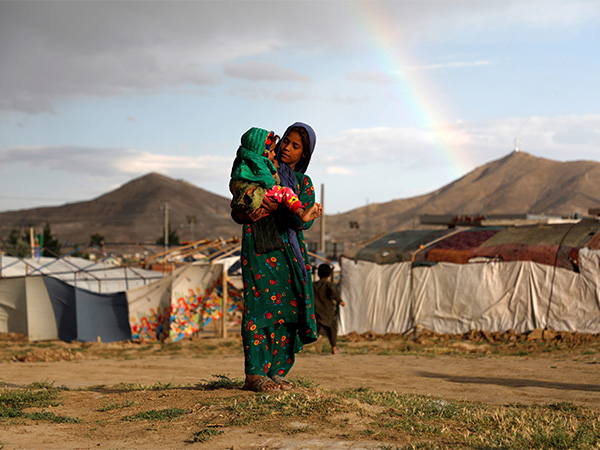
The United Nations Refugee Agency (UNHCR) and the United Nations Development Programme (UNDP) have announced a major new global partnership aimed at helping millions of forcibly displaced people move beyond long-term humanitarian dependence and rebuild stable, self-reliant lives.
The two agencies officially launched the Joint Collaboration Framework 2026–2030 during the UN Chief Executives Board meeting in Tokyo, signalling a stronger international effort to connect humanitarian assistance with long-term development and economic recovery strategies.
The new four-year agreement comes at a time when global displacement has reached historically high levels due to armed conflict, climate disasters, economic instability, and political crises affecting multiple regions around the world.
According to UN figures, approximately 117 million people worldwide are currently forcibly displaced, including refugees, internally displaced persons, and asylum seekers. Many have spent years living in uncertain conditions without stable employment, education, healthcare, or long-term opportunities.
International agencies warn that displacement is becoming increasingly prolonged, placing enormous pressure on host countries, local economies, public services, and social stability.
The new framework seeks to address those challenges by shifting the international response from short-term emergency aid toward sustainable development and inclusion.
Under the agreement, UNHCR and UNDP will work more closely with governments, international financial institutions, development agencies, and humanitarian partners to align refugee protection efforts with broader economic development investments.
The partnership is anchored in the principles of the Global Compact on Refugees and the UN Secretary-General’s Action Agenda on Internal Displacement, both of which promote shared responsibility and long-term solutions for displaced populations.
The collaboration will focus on several key priorities, including:
-
Strengthening national and local public systems
-
Expanding economic and livelihood opportunities
-
Supporting social inclusion and local governance
-
Building climate resilience in displacement-affected communities
-
Mobilising development and climate financing
Officials say the initiative recognises that displacement is no longer only a humanitarian issue but also a major development and stability challenge affecting countries already under economic and social pressure.
UNDP Administrator Alexander de Croo said many host countries are struggling to manage the growing impact of displacement while facing their own economic and environmental difficulties.
“Displacement today is a stability challenge for countries already under strain,” de Croo said.
He explained that the partnership aims to move beyond emergency response models by investing early in jobs, services, infrastructure, and financial systems that can support both displaced people and host communities.
“By strengthening opportunities and resilience, we can help create more stable futures for everyone affected,” he added.
UN High Commissioner for Refugees Barham Salih emphasised that humanitarian aid alone cannot provide lasting solutions for displaced populations.
“Emergency assistance saves lives, but it cannot become a permanent substitute for dignity, opportunity, and self-reliance,” Salih said.
He noted that millions of refugees remain dependent on aid for years because they lack access to employment, education, legal inclusion, and economic opportunities.
Through the partnership, the agencies hope to expand pathways that allow displaced people to rebuild independent lives while contributing positively to the communities hosting them.
The framework represents a shift from previous cooperation models focused mainly on coordination toward more integrated and strategic joint delivery.
In priority countries, UNHCR and UNDP will work together to combine protection services with development programmes focused on livelihoods, recovery, governance, infrastructure, climate adaptation, and financing.
The agreement also reflects growing international concern about the connections between displacement, climate change, poverty, and economic fragility.
Climate-related disasters such as droughts, floods, and extreme weather events are increasingly contributing to displacement worldwide, particularly in vulnerable developing countries.
Experts say many host countries are now facing “compound crises,” where conflict, environmental pressures, and economic instability overlap, creating severe challenges for displaced populations and local communities alike.
The partnership launch in Tokyo also highlights Japan’s long-standing support for “humanitarian-development-peace nexus” approaches, which aim to link emergency aid with long-term recovery and peacebuilding efforts.
Japan has played an important role in supporting resilience-building programmes and local recovery initiatives in crisis-affected regions around the world.
Development analysts say the new collaboration between UNHCR and UNDP could help reshape how the international community responds to large-scale displacement in the coming years.
Rather than focusing solely on emergency relief, the partnership aims to create sustainable systems that promote inclusion, economic participation, and long-term resilience for displaced populations and host communities alike.
Officials believe this integrated approach will become increasingly important as global displacement levels continue rising amid ongoing conflicts, climate emergencies, and economic uncertainty.


 Google News