



Gymkhana Club: Delhi's exclusive address; CP architect designed its building
The Delhi Gymkhana Club, a century-old exclusive address, faces eviction by June 5 after the Centre requested the club to hand over its premises for defence infrastructure and public security purposes.
- Country:
- India
Tucked in a leafy enclave in the heart of the city, the Delhi Gymkhana Club, an exclusive address that seamlessly combines history, power and access for the select few, has for over a century retained its quiet elegance and colonial-era charm.
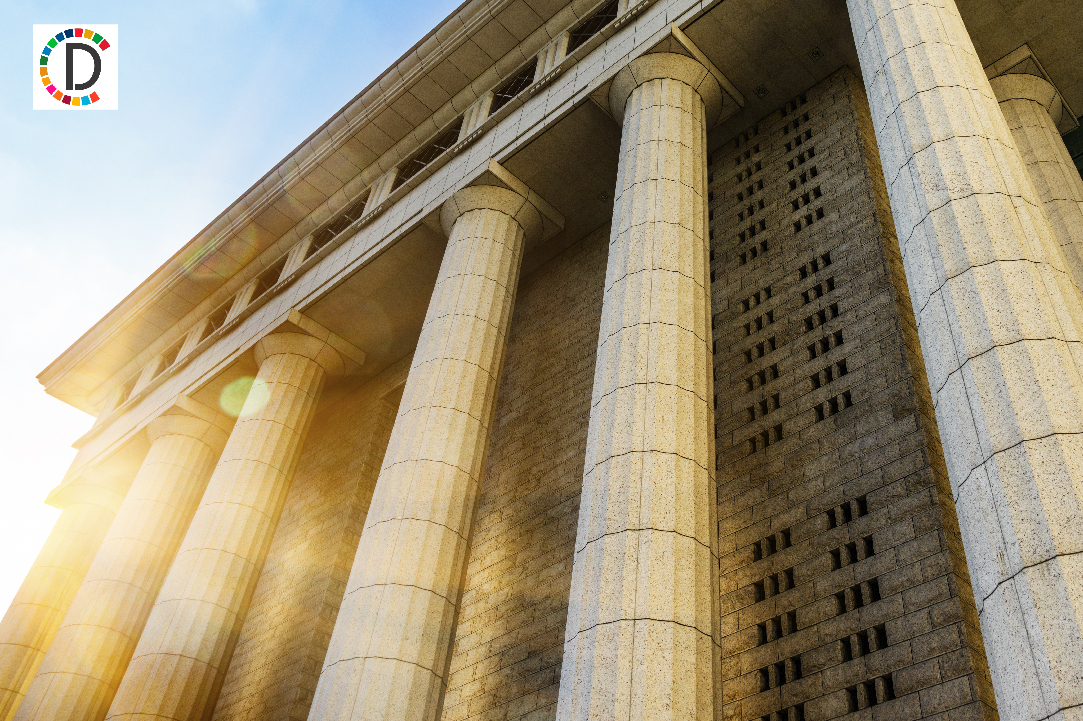
Its current home -- the majestic white building endowed with its famed ballroom, and surrounded by carefully manicured lawns, sits on a sprawling 27.3-acre plot at 2, Safdarjung Road, and was envisioned by architect Robert Tor Russell, who also designed the famed Connaught Place complex and the erstwhile Commander-in-Chief's house (now Teen Murti Bhawan) in Delhi.
However, this nearly uninterrupted legacy of more than 110 years, which has defined wealth, power and social status, not ostentatiously but quietly, may soon come to an end, as the Centre has asked the historic club to hand over its premises by June 5, saying the land parcel was required for ''strengthening and securing defence infrastructure'' and for other vital public security purposes.
In its May 22 order, the Land and Development Office (L&DO) under the Ministry of Housing and Urban Affairs, seeking ''re-entry and resumption'', has.
said that the land falls in a highly sensitive and strategic zone and was critically required for urgent institutional and governance-related needs.
The move has triggered debates on TV channels and on social media platforms, with some dubbing the club a ''vestige'' of the colonial era, while others argue that this recreational space -- a Lutyens' Delhi showpiece -- is steeped in history and heritage that must be acknowledged without any bias.
Originally founded on July 3, 1913, as the Imperial Delhi Gymkhana Club, the institution was established to primarily serve colonial administrators and military officers.
The word 'Imperial' was dropped after India gained Independence in 1947, but the club continued to maintain its premium property and the imperial charm of yesteryears, its swimming pool, tennis courts, billiards table, and the majestic ballroom with a wooden floor, attracting the who's who of society.
Such is the aura and exclusivity of the club that even getting its membership is considered a status symbol, given its very long waiting period.
The Delhi Gymkhana Club, which celebrated its centenary year in 2013, has a distinguished membership list, including former prime ministers, senior government and defence officials, members of the judiciary, corporate and business houses and other eminent citizens.
In February 2016, the club hosted its first literature festival, throwing it open to non-members too with prior registration.
One of the oldest clubs in the country, the story of this elite address is in many ways also the story of the evolution of New Delhi as India's new capital, after it was shifted from Calcutta (now Kolkata) following the announcement made at the 1911 Delhi Durbar.
The club moved to its present location on July 3, 1913. It was then called the 'Imperial Delhi Gymkhana Club' and Sir Spencer Harcourt Butler was its first president, according to the club's website.
Sir Spencer, a well-known administrator during the British rule, also served as the first governor of the then United Provinces of Agra and Oudh in the 1920s.
The Gymkhana Club in Delhi was built at its current address in the early 1930s. The contract for building was given to architect Robert Tor Russell, the website says.
Sir Edwin Landseer Lutyens and Sir Herbert Baker were the main architects of the new imperial capital, to be later named 'New Delhi', which was built from 1912 to 1931, and formally inaugurated by the then Viceroy Lord Irwin in February 1931.
The club's building was constructed in the beating heart of this new capital. The address, 2, Safdarjung Road, is adjacent to the prime minister's residence on Lok Kalyan Marg (earlier Race Course Road).
Russell was keen that the design of the new structure of the club should complement the bungalows that were coming up in the neighbourhood.
His drawing of the main building, the residential areas, and even the servant quarters reflect the ''spartan yet majestic building'' set amidst green lawns.
''In fact, Russell remained involved in the Club's management and refurbishment until the 1930s as a member of the general committee. The coming up of a new structure that was contracted to one of the two big contractors of New Delhi, Sir Teja Singh Malik, saw the main building take shape with a gravel path in front and a swimming bath close to Safdarjung Road,'' the website reads.
The club's website also carries some anecdotes associated with its evolution.
In the early 1930s, Lady Willingdon, wife of the then Viceroy Lord Willingdon, ''gifted Rs 21,000 for the construction of a swimming pool,'' the website says.
Her ''munificent gifts'' were not going to go unrecognised and the general committee soon ordered that suitably inscribed tablets be put up in recognition of her generosity. The gleaming tablets, 'Lady Willingdon Swimming Bath' and 'The Willingdon Squash Courts' would be quickly ordered and put up well in time before the Viceroy Lord Willingdon and Lady Willingdon would visit the Gymkhana Club for their farewell, on March 16, 1936.
While the fate of the Delhi Gymkhana Club remains uncertain at present, its legend will endure.
(This story has not been edited by Devdiscourse staff and is auto-generated from a syndicated feed.)
- READ MORE ON:
- Safdarjung Road
- Teen Murti Bhawan
- L&DO
- 'The Willingdon Squash Courts'
- Calcutta
- The Gymkhana Club
- Spencer
- Herbert Baker
- United Provinces
- Connaught Place
- Robert Tor Russell
- Agra and Oudh
- New Delhi'
- Delhi
- Kolkata
- Edwin Landseer Lutyens
- the Ministry of Housing and Urban Affairs
- India
- Spencer Harcourt Butler
- Imperial Delhi Gymkhana Club'
ALSO READ
Demolition drive against illegal constructions in Kolkata
Cong announces July 21 rally in Kolkata after TMC's poll defeat, invites ex-leaders to rejoin party
ED begins process to attach ex-Kolkata Police officer's palatial house in Bengal's Murshidabad
TMC councillor found hanging at home in Kolkata, probe underway
US Secretary of State Marco Rubio visits Saint Teresa's Mother House, children's home in Kolkata


 Google News