



SA Unveils Anti-Crime Crackdown Targeting Corruption, Illegal Mining and Organised Criminal Networks
Kubayi warned that organised crime in South Africa operates through highly integrated networks where corruption functions as a central enabling force.
- Country:
- South Africa
South Africa is intensifying its battle against organised crime, corruption and illicit financial networks through a sweeping strategy focused on stronger legislation, coordinated law enforcement action and aggressive asset forfeiture measures aimed at dismantling criminal enterprises at their financial core.
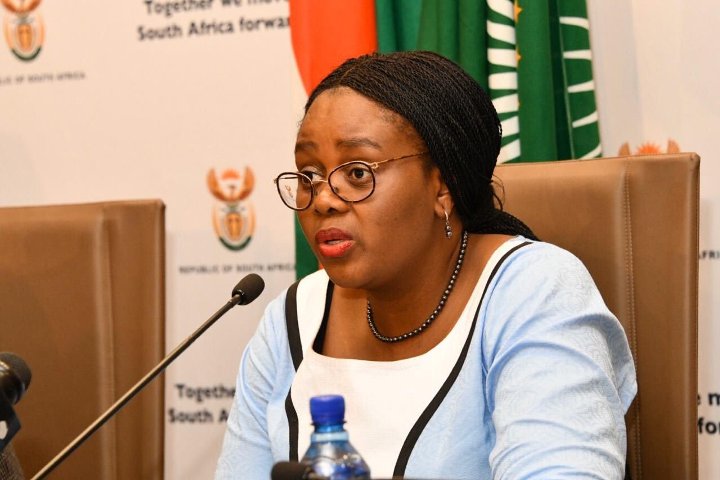
Tabling the Department of Justice and Constitutional Development’s Budget Vote in Parliament on Tuesday, Justice and Constitutional Development Minister Mmamoloko Kubayi outlined a comprehensive plan to modernise South Africa’s anti-crime framework and strengthen cooperation across the justice system to combat what she described as a deeply interconnected criminal ecosystem.
The strategy comes amid growing national concern over escalating organised crime, illegal mining syndicates, corruption networks, extortion rackets, money laundering operations and gang-related violence that continue to threaten economic stability and public safety across the country.
Organised Crime and Corruption Described as Interconnected National Threat
Kubayi warned that organised crime in South Africa operates through highly integrated networks where corruption functions as a central enabling force.
“Organised crime is a criminal ecosystem that links many of the countless criminal acts including extortion, illegal mining, money laundering, gang violence etc. while corruption is a lifeblood of organised crime,” the Minister said.
She stressed that effective disruption of these criminal systems requires full coordination across the justice value chain, including:
-
Investigative agencies
-
Police services
-
Prosecutors
-
Courts
-
Anti-corruption bodies
“This means that the justice value chain from investigative agencies through prosecution to our courts have to work together in a coordinated fashion to bring criminals to book,” Kubayi added.
Special Task Team Accelerating Corruption Prosecutions
The Minister revealed that the National Prosecuting Authority (NPA) and the South African Police Service (SAPS) are already collaborating through a specialised task team established following the interim report of the Madlanga Commission of Inquiry.
According to Kubayi, the task team has been created specifically to fast-track prosecutions related to:
-
Corruption
-
State infiltration
-
Organised criminal activity
-
Financial misconduct
The initiative is aimed at strengthening the government’s ability to prosecute complex organised crime cases that often involve multiple agencies and cross-sector corruption networks.
Asset Forfeiture Becomes Central Weapon Against Criminal Syndicates
A major component of the government’s anti-crime strategy is the intensified use of asset forfeiture mechanisms to deprive criminals of illegally acquired wealth and dismantle the financial foundations of organised crime.
Kubayi said the National Prosecuting Authority’s Asset Forfeiture Unit (AFU) significantly exceeded its targets during the previous financial year.
AFU Performance Highlights
-
481 freezing orders secured against a target of 310
-
Performance exceeded target by 55 percent
-
Freezing orders valued at R859.4 million secured against a target of R700 million
-
Recoveries of R533 million achieved against a target of R160 million
-
Recovery target exceeded by an extraordinary 233 percent
The Minister said the recoveries were driven largely by ongoing civil asset forfeiture matters aimed at ensuring individuals and companies do not benefit from corruption and unlawful activities.
SIU Secures Multi-Billion Rand Anti-Corruption Victories
Kubayi also highlighted major achievements by the Special Investigating Unit (SIU), which has intensified efforts to recover public funds lost through corruption and irregular contracts.
Among the most significant developments were court-ordered settlement agreements involving major multinational corporations.
Major SIU Recoveries and Legal Victories
-
Wabtec settlement: R7.9 billion
-
Bombardier settlement: R14.3 billion
-
Both contracts declared unconstitutional and invalid by court order
-
R600 million recovered for Transnet through the Nedbank interest swap settlement
Additional Special Tribunal rulings included:
-
Easyway order valued at R68 million
-
Buthelezi EMS contract worth R1 billion set aside, with R532 million recoverable
-
Halo’s R115 million contract declared invalid
Overall, the SIU has so far:
-
Recovered R609 million in cash
-
Prevented R854 million in potential losses
Government Raises Anti-Corruption Targets for New Financial Year
The government plans to significantly intensify its financial disruption strategy during the current financial year.
New AFU Targets
The Asset Forfeiture Unit aims to secure:
-
R1 billion in freezing orders
-
R350 million in recoveries
SIU Financial Targets
The SIU has set ambitious targets including:
-
R2 billion in cash and asset recoveries
-
R6 billion in contracts or administrative decisions set aside or declared invalid
-
R1.5 billion in potential losses prevented
-
R3 billion in matters referred for civil proceedings or defence actions
Officials say the approach is designed not only to punish offenders but also to weaken the economic foundations of organised criminal enterprises.
Government Moves to Strengthen Whistleblower Protection
Kubayi announced that the department has released a new whistleblower protection bill for public comment, with consultations scheduled to conclude on May 14.
The proposed legislation seeks to significantly strengthen safeguards for individuals who expose corruption and criminal misconduct.
Key provisions include:
-
Clear reporting procedures for whistleblowers
-
Proactive physical protection measures
-
Anti-retaliation mechanisms
-
Potential incentives for disclosures
The government hopes stronger protections will encourage greater reporting of corruption, fraud and organised criminal activities.
South Africa to Introduce Biometric SIM Card Verification
One of the most significant reforms announced involves proposed amendments to the Regulation of Interception of Communications and Provision of Communication-Related Information Act (RICA).
Kubayi said criminals have increasingly exploited weaknesses in electronic communications systems to conduct illegal activities anonymously.
To address this, the government is preparing stricter SIM registration measures including:
-
Biometric verification
-
Passport validation
-
Immigration status checks for foreign nationals
The Minister revealed that mobile network operators have been instructed to submit compliance plans by the end of June to address unregistered and illegal SIM cards.
Government enforcement measures will begin in July, with non-compliance subject to penalties under RICA legislation.
Criminal Procedure and Public Protector Laws Also Facing Reform
Kubayi further confirmed that the department plans to introduce amendments to several key pieces of legislation considered outdated or inadequate.
Planned reforms include amendments to:
-
Criminal Procedure Act
-
Public Protector Act
-
SIU Act
-
NPA Act
The proposed changes aim to:
-
Enhance operational powers of the SIU
-
Allow preliminary investigations by the SIU
-
Strengthen the financial and administrative independence of the NPA
-
Improve effectiveness of oversight institutions
Government to Remove Confidentiality Around Sex Offender Register
The Minister also announced plans to remove confidentiality clauses preventing publication of the National Register for Sex Offenders.
The proposed amendment is expected to allow broader public access to offender information as part of efforts to strengthen child protection and public safety mechanisms.
South Africa Escalating Institutional Response to Crime Crisis
The sweeping reforms outlined by Kubayi reflect South Africa’s intensifying institutional response to growing public concern over corruption, organised crime and declining trust in state institutions.
Analysts say the government’s increasing focus on financial disruption, asset recovery and coordinated prosecution strategies aligns with global trends in combating sophisticated criminal enterprises.
However, experts caution that long-term success will depend heavily on:
-
Effective inter-agency coordination
-
Judicial efficiency
-
Political consistency
-
Enforcement capacity
-
Protection of investigative independence
The coming months are expected to see intensified legislative activity and law enforcement operations as the government moves to implement the reforms outlined in Parliament.
- READ MORE ON:
- South Africa crime crackdown
- Mmamoloko Kubayi
- organised crime
- corruption South Africa
- Asset Forfeiture Unit
- AFU
- SIU
- National Prosecuting Authority
- SAPS
- illegal mining
- money laundering
- RICA amendments
- biometric SIM registration
- whistleblower protection
- South Africa Parliament
- corruption investigations
- state capture
- criminal networks
- South African justice system
- financial crime


 Google News