



Sustainable Cities Ahead: Empowering Municipalities for India’s Urban Future
The report, developed by IIPA and allied institutes, presents a comprehensive roadmap for reshaping Indian cities through stronger local governance, inclusive infrastructure, social equity, environmental sustainability, and innovative financing. It envisions municipalities as empowered, accountable, and citizen-driven institutions balancing growth with justice and sustainability.
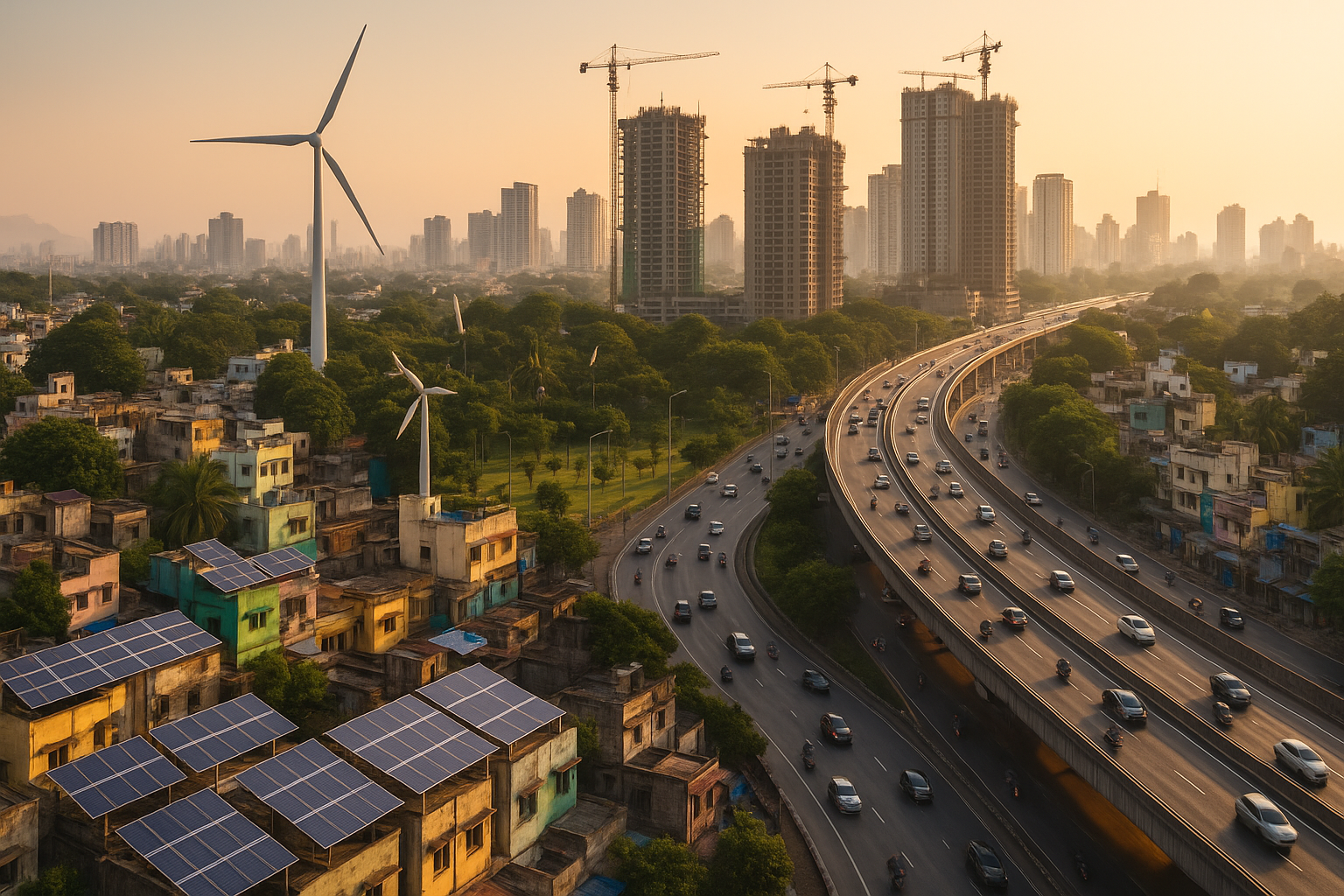
The report, prepared through the collaborative efforts of institutions such as the Indian Institute of Public Administration (IIPA) and state-level urban development research centers, sets out a detailed blueprint for transforming urban governance and service delivery in India. It begins with a strong emphasis on the dual nature of the country’s urban transition. On one hand, cities are becoming the engines of growth, but on the other, they remain sites of inequality, crumbling infrastructure, and environmental stress. The authors argue that no meaningful progress can be made without strengthening the institutional capacity of municipalities and embedding reforms that empower local governments to act as independent yet accountable custodians of urban development. This context sets the tone for a report that is as much about democratic deepening as it is about roads, water, and sanitation.
Governance at the Core of Reform
A central theme running through the report is the inadequacy of current governance structures in meeting the demands of rapidly expanding urban populations. Municipalities are often described as being resource-starved, heavily dependent on state transfers, and burdened with outdated systems of planning and accounting. The proposed reforms are comprehensive, encompassing training programs to build managerial capacity, modernized double-entry accounting systems, and technology-enabled services designed to reduce corruption and enhance efficiency. By doing so, the report envisions municipalities that can function not as passive executors of state policies but as proactive, financially viable institutions that engage directly with citizens. The underlying philosophy is that good governance is inseparable from participatory governance, and this conviction underpins the entire project framework.
Infrastructure with a Human Face
Infrastructure occupies a prominent position in the project’s agenda, with the report noting that the state of basic services often undermines health, education, and economic opportunities. Water supply networks are unreliable, sanitation coverage is patchy, roads are inadequate, and solid waste is mismanaged, conditions that collectively erode the productivity and well-being of urban residents. The proposed investments in water, sanitation, and roads are therefore framed not merely as engineering solutions but as interventions that directly influence equity and inclusiveness. Special mention is made of the disproportionate burden borne by women and the urban poor who often live in informal settlements with no secure tenure or reliable service delivery. For this reason, the infrastructure plan includes targeted provisions for slum upgrading, secure housing, and improved access to utilities, thereby weaving human welfare into the technical framework of urban development.
Tackling Poverty through Inclusion
The document makes a forceful case for linking infrastructure with social development. Programs aimed at poverty alleviation are not presented as add-ons but as integral components of urban transformation. The report highlights how slum dwellers remain caught in cycles of deprivation, not simply because of inadequate infrastructure but because of weak access to credit, insecure housing rights, and exclusion from decision-making processes. To break these cycles, it advocates the integration of microfinance initiatives, vocational skill training, and women’s self-help groups into the framework of city development. Community-based organizations are portrayed as vital vehicles for ensuring that marginalized voices shape urban priorities rather than being treated as passive beneficiaries. By highlighting social equity alongside infrastructure, the report reinforces the belief that inclusive development is the only sustainable development.
Putting Environment at the Center
Environmental sustainability emerges as a recurring concern in the report. It points to growing urban footprints, untreated sewage that contaminates rivers, worsening air quality due to transport emissions, and unscientific methods of waste disposal. These environmental challenges are depicted not as side issues but as existential risks that could derail long-term development. In response, the report calls for greener planning practices, investments in sewage treatment facilities, adoption of energy-efficient building codes, and citizen-driven waste segregation at the household level. The argument is clear: without integrating environmental safeguards into every aspect of urban development, any short-term gains will eventually collapse under ecological stress. The proposed strategies therefore position sustainability as a fundamental pillar rather than a peripheral concern.
Financing the Future of Cities
The financial framework laid out in the document is perhaps the most technically dense yet crucial section. It underscores the fragile fiscal health of most municipalities and the urgent need to diversify their revenue sources. Property tax reforms, user charges for water and sanitation, public-private partnerships, and pooled municipal bonds are among the strategies recommended. Innovative financing mechanisms, including access to capital markets, are presented as ways to reduce dependency on state-level transfers. The implicit message is that for cities to be sustainable, they must be capable of generating and managing their own revenues while ensuring transparency and accountability in their financial practices. Finally, the report emphasizes the importance of monitoring and evaluation, recognizing that reforms mean little without mechanisms to track progress. It introduces a framework of performance indicators covering service delivery, financial management, citizen satisfaction, and environmental outcomes. Social audits, citizen report cards, and grievance redressal systems are highlighted as essential tools for ensuring accountability and responsiveness.
Taken together, the document is more than a policy prescription, it is a comprehensive vision for reimagining Indian cities. It portrays sustainable, inclusive, and well-governed municipalities as achievable, provided there is institutional courage and genuine citizen participation. It insists that building livable cities is not only about constructing physical infrastructure but also about nurturing institutions that are responsive, accountable, and capable of balancing economic growth with social equity and environmental sustainability. The blueprint it offers is at once ambitious and pragmatic, blending governance reform with grassroots participation, fiscal innovation with environmental responsibility, and infrastructure investment with social justice.
- FIRST PUBLISHED IN:
- Devdiscourse


 Google News