



Myanmar Earthquake Recovery: ILO Rebuilds Livelihoods Through Jobs, Skills and Community-Led Recovery
The programme generated 27,733 workdays for 3,014 workers, with women accounting for 52 per cent of participants — a significant achievement in regions where women often face barriers to formal employment opportunities.
- Country:
- Myanmar
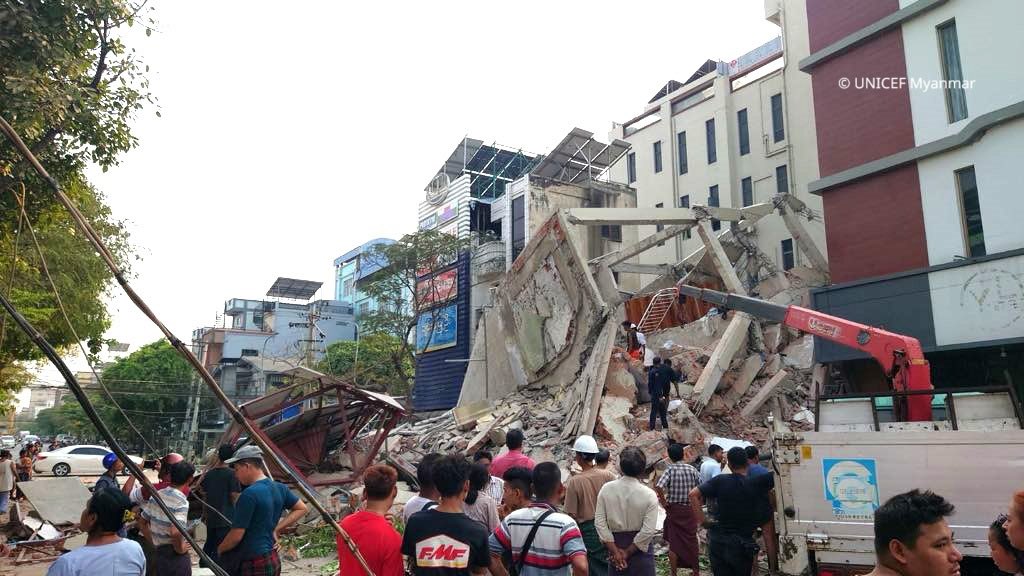
One year after the devastating March 2025 earthquake struck Myanmar, communities across Mandalay Region and Shan State are beginning to rebuild not only damaged roads and water systems, but also livelihoods, confidence and long-term resilience.
In a country already battered by economic instability, displacement, labour market collapse and prolonged humanitarian crises, the earthquake deepened hardship for thousands of vulnerable families. For many communities, recovery required far more than temporary emergency relief — it demanded sustainable employment, practical skills, stronger local institutions and renewed economic opportunity.
That is the approach taken by the International Labour Organization (ILO), whose Employment Intensive Investment Programme (EIIP) and vocational training initiatives have supported a large-scale, community-led recovery effort focused on decent work, skills development and locally driven reconstruction.
Over the 12 months following the disaster, the ILO worked across 22 villages in Mandalay Region and Shan State, combining infrastructure rehabilitation with employment generation and vocational training designed to leave long-term benefits beyond the emergency response phase.
Thousands of Workdays Generated in Communities Hit by Crisis
The programme generated 27,733 workdays for 3,014 workers, with women accounting for 52 per cent of participants — a significant achievement in regions where women often face barriers to formal employment opportunities.
The initiative also trained 393 people in vocational and entrepreneurship skills, with women representing nearly 79 per cent of beneficiaries, underscoring the programme’s strong emphasis on inclusive recovery and women’s economic participation.
Key reconstruction achievements included:
-
2.51 kilometres of concrete roads
-
1.49 kilometres of concrete footpaths
-
1.55 kilometres of embankment and earthen road works
-
68 tube wells with handpumps
-
6 culverts
-
3 water supply and distribution systems
-
1 education centre extension
-
1 new skills training centre
-
2 communal latrines
-
125 household sanitary latrines
The infrastructure projects were designed not only to restore essential services but also to create immediate employment opportunities for disaster-affected residents through labour-intensive methods.
Recovery Through Skills and Livelihoods
Beyond rebuilding infrastructure, the ILO placed strong emphasis on restoring livelihoods through practical training linked to real economic opportunities.
Participants received training in masonry, sewing, weaving, entrepreneurship and computer literacy, based on needs identified by local communities and social partners.
For many survivors, the training became a turning point after months of uncertainty.
“After the earthquake, many of us lost our homes, livelihoods and hope for the future,” said sewing trainee A Thawe Moe from Tha Lae Oo Kone Village.
“Through the two-month sewing training supported by the ILO, I gained practical skills that can help me earn an income again. The cash-for-skills opportunity gave us not only training, but also confidence and hope to rebuild our lives.”
Some participants were later able to secure contracts to sell products made using their newly acquired skills — a key step toward sustainable income generation rather than short-term aid dependency.
New Skills Training Centre Brings Hope to Inle Lake Communities
One of the programme’s flagship achievements was the construction of a new skills training centre serving communities around Inle Lake.
Equipped with sewing machines, weaving equipment, computers and training materials, the facility is intended to support long-term vocational learning opportunities for women and young people.
“We are very grateful to the ILO for supporting this skills training centre in our Inle Lake communities,” said community leader Thin Thin Mu from Ywar Gyi Upper Village.
“The centre is equipped with sewing machines, weaving machines, computers and other essential materials that will help women and youth continue learning and develop sustainable livelihoods.”
“This support is not only building a training centre, but also creating long-term opportunities and hope for our communities.”
Community Participation at the Centre of Recovery
A defining feature of the ILO’s approach was its emphasis on community ownership and participation.
Village development committees were established to help identify local priorities, oversee implementation and strengthen accountability throughout the recovery process.
Rather than treating affected populations as passive recipients of assistance, the programme created structured platforms for local decision-making and engagement.
The ILO also partnered closely with local civil society organizations, transferring practical knowledge aimed at improving the quality, transparency and sustainability of recovery work.
This included introducing stronger practices around:
-
Occupational safety and health (OSH)
-
Public auditing and accountability
-
Social insurance awareness
-
Labour protections and standards
-
Safer construction methods
These measures helped shift the recovery focus from simply rebuilding quickly to rebuilding safely, inclusively and transparently.
Strengthening Local Capacity in Fragile Conditions
Local partners say the programme’s long-term institutional impact may prove just as important as the physical reconstruction itself.
“Through our partnership with the ILO, we were able to support earthquake-affected communities not only by rebuilding essential infrastructure, but also by strengthening people’s skills and livelihoods,” said Khun Chit Oo of the Parami Development Network.
“Community members actively participated in the recovery process through infrastructure works, masonry, sewing, weaving and entrepreneurship trainings.”
“This approach helped communities regain income opportunities, confidence and hope while promoting safer, more inclusive and community-led recovery efforts.”
ILO officials say the Myanmar recovery programme demonstrates how employment-centred recovery can play a critical role in fragile and crisis-affected environments where communities face overlapping shocks.
Promoting Safer and More Accountable Recovery
In February 2026, the ILO convened representatives from United Nations agencies and development partners for a knowledge-sharing event focused on lessons from the recovery programme and the importance of employment-focused reconstruction strategies.
The organization also continued promoting occupational safety and health training and labour standards awareness among local partners and implementing agencies.
According to the ILO, integrating labour protections, community participation and accountability into post-disaster recovery is essential for building resilience in countries facing repeated crises.
Recovery Beyond Infrastructure
As Myanmar continues to confront political instability, economic hardship and humanitarian pressures, the earthquake recovery programme highlights the growing importance of approaches that combine reconstruction with long-term livelihood support and local empowerment.
The ILO says the experience in Myanmar shows that successful recovery is not only about rebuilding damaged infrastructure — it is also about strengthening local capacities, improving governance practices and creating opportunities that endure long after emergency assistance ends.
In communities struggling to recover from multiple crises at once, that may be among the most meaningful achievements of all.
- READ MORE ON:
- Myanmar earthquake
- ILO
- Employment Intensive Investment Programme
- EIIP
- disaster recovery
- livelihoods
- vocational training
- Mandalay Region
- Shan State
- women empowerment
- community-led recovery
- occupational safety and health
- infrastructure rehabilitation
- humanitarian response
- Inle Lake
- labour market recovery
- sustainable livelihoods
- post-disaster reconstruction


 Google News