



WMO Warns Global Temperatures Likely to Remain at Record Highs Through 2030
The findings suggest that the world is moving deeper into a period of sustained warming, with the likelihood of new temperature records increasing significantly during the coming years.
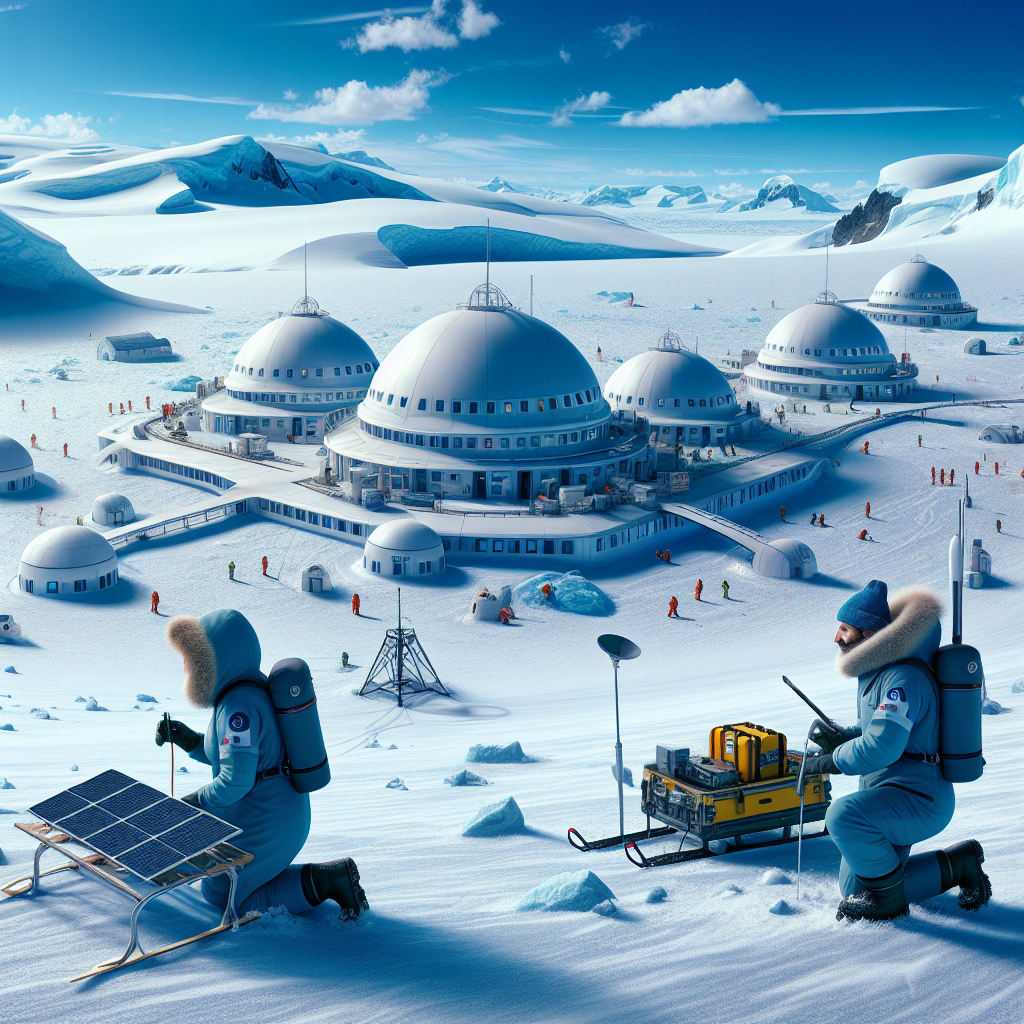
Global temperatures are expected to remain at or near historic highs over the next five years, with the Arctic continuing to warm at a rate far exceeding the global average, according to a new climate outlook released by the World Meteorological Organization (WMO). The report paints a concerning picture of the Earth's near-term climate trajectory, highlighting growing risks associated with rising temperatures, shifting rainfall patterns, shrinking Arctic sea ice and increasingly frequent climate extremes.
Produced by the United Kingdom’s Met Office on behalf of the WMO, the Global Annual-to-Decadal Climate Update combines forecasts from leading international climate centers and offers one of the most comprehensive assessments of expected climate conditions between 2026 and 2030.
The findings suggest that the world is moving deeper into a period of sustained warming, with the likelihood of new temperature records increasing significantly during the coming years.
Record-Breaking Heat Expected to Continue
According to the report, annual global average temperatures between 2026 and 2030 are projected to range between 1.3°C and 1.9°C above pre-industrial levels measured during the 1850–1900 period.
Scientists estimate there is an 86 percent probability that at least one year during the next five years will surpass 2024 as the warmest year ever recorded.
The forecast reflects the continuing influence of human-induced climate change, driven primarily by greenhouse gas emissions from the burning of fossil fuels, deforestation and industrial activities.
While year-to-year temperature variations can be influenced by natural climate phenomena, the long-term warming trend remains overwhelmingly linked to human activity.
The prospect of additional record-breaking years highlights the accelerating pace of global warming and the growing urgency of climate mitigation efforts.
Temporary Exceedance of the 1.5°C Threshold Becomes Increasingly Likely
One of the most closely watched findings in the report concerns the 1.5°C warming threshold, a key benchmark associated with the Paris Agreement.
Scientists estimate there is a 91 percent chance that at least one year between 2026 and 2030 will temporarily exceed 1.5°C above pre-industrial levels.
This threshold was already breached temporarily in 2024, when global average temperatures reached approximately 1.55°C above the pre-industrial baseline.
In addition, the report indicates a 75 percent probability that the average temperature across the entire 2026–2030 period will exceed 1.5°C above pre-industrial levels.
However, climate experts emphasize that these temporary exceedances do not necessarily mean the Paris Agreement's long-term goals have been permanently missed.
Understanding the Paris Agreement Temperature Targets
The Paris Agreement's temperature goals are based on long-term averages rather than individual years.
Specifically, the agreement aims to limit global warming to well below 2°C while pursuing efforts to keep warming below 1.5°C over extended periods, typically measured across decades rather than single years.
Scientists explain that temporary exceedances are expected to become more common as global temperatures continue to rise. These short-term fluctuations do not automatically indicate that the long-term climate targets are unattainable.
Nevertheless, repeated temporary breaches serve as a warning that the world is moving dangerously close to thresholds associated with more severe climate impacts.
El Niño Could Fuel Future Temperature Records
The report also points to developing conditions in the tropical Pacific Ocean that may contribute to additional warming in coming years.
Forecasts indicate a tendency toward El Niño conditions, particularly during 2027 and 2028.
El Niño is a naturally occurring climate phenomenon characterized by warmer-than-average sea surface temperatures in the central and eastern Pacific Ocean. It often contributes to higher global temperatures and can influence weather patterns worldwide.
Climate experts note that if El Niño develops as projected, it could significantly increase the likelihood of another record-breaking year.
Researchers involved in the report suggest that 2027 may emerge as a particularly strong candidate for setting new global temperature records if El Niño conditions strengthen toward the end of 2026.
Arctic Warming Continues to Outpace the Rest of the World
Among the report's most alarming findings is the projected pace of Arctic warming.
Temperatures across the Arctic during the next five extended winter seasons (November through March) are expected to average 2.8°C above the 1991–2020 baseline.
This warming rate is more than three-and-a-half times greater than the projected global average temperature increase over the same period.
The phenomenon, known as Arctic amplification, occurs because melting snow and ice expose darker surfaces that absorb more solar energy, further accelerating warming.
Rapid Arctic warming has significant implications not only for polar ecosystems but also for global weather patterns, sea-level rise and climate stability.
Sea Ice Decline Expected to Continue
The report forecasts continued reductions in Arctic sea ice concentration over the coming decade.
Particularly significant declines are expected in:
-
The Barents Sea;
-
The Bering Sea;
-
The Sea of Okhotsk.
Arctic sea ice plays a crucial role in regulating global climate by reflecting sunlight back into space and helping maintain temperature balance across the planet.
As ice coverage decreases, the Arctic Ocean absorbs more heat, reinforcing warming trends and contributing to broader climate changes.
Scientists warn that continued sea ice loss could have cascading effects on marine ecosystems, weather systems and global ocean circulation patterns.
Rainfall Patterns Reflect a Warming Climate
The outlook also projects notable changes in precipitation patterns across different regions of the world.
During the next five Northern Hemisphere winter seasons, wetter-than-average conditions are expected in many high-latitude regions.
At a broader scale, the report identifies a pattern consistent with long-term climate change projections:
-
Increased rainfall in tropical regions;
-
Increased precipitation in higher latitudes;
-
Reduced rainfall in subtropical regions, especially in parts of the Southern Hemisphere.
These shifts reflect the changing dynamics of the global water cycle as rising temperatures alter evaporation rates, atmospheric moisture levels and storm systems.
Such changes can have major implications for agriculture, water resources, ecosystems and disaster risk management.
Drought Risks Increase in Some Regions
While some areas are expected to experience wetter conditions, others may face increasing risks of drought and water scarcity.
The report suggests that between May and September during the 2026–2030 period:
-
Wetter conditions are more likely in the Sahel region of Africa;
-
Northern Europe may receive above-average precipitation;
-
Alaska and Siberia are expected to become wetter;
-
Parts of the Amazon Basin are more likely to experience below-average rainfall.
Reduced rainfall in the Amazon is particularly concerning given the rainforest's critical role in global carbon storage, biodiversity conservation and regional climate regulation.
Persistent drying trends could increase risks of forest degradation, wildfires and ecosystem disruption.
Regional Climate Variability Remains Significant
The report emphasizes that regional climate impacts will continue to vary considerably.
An example highlighted is Southeastern Europe, where winter precipitation patterns have fluctuated significantly over recent decades.
After experiencing unusually dry conditions in recent years, the region may see above-average precipitation during the 2026–2030 period.
However, forecasters caution that prediction skill remains relatively low for this area, reflecting the inherent complexity of regional climate systems.
Such variability underscores the importance of region-specific forecasting and adaptation planning.
Forecasts Support Climate Planning and Early Warning Systems
The climate outlook is intended to support a wide range of users, including:
-
National Meteorological and Hydrological Services;
-
Regional Climate Centres;
-
Regional Climate Outlook Forums;
-
Disaster management agencies;
-
Agricultural planners;
-
Water resource managers.
By providing guidance on expected climate conditions over the coming years, the forecasts help decision-makers prepare for emerging risks and develop adaptation strategies.
Improved climate intelligence is becoming increasingly important as societies seek to manage the impacts of warming temperatures and more frequent extreme weather events.
Scientific Confidence in Forecasts Remains High
The report notes that confidence in forecasts of annual global average temperature is particularly strong.
Climate models used in the update have demonstrated high accuracy when tested against historical observations, giving scientists considerable confidence in their projections.
The assessment combines contributions from 13 leading international climate institutions, including major forecasting centers in Europe and North America.
This collaborative approach strengthens the reliability of the findings and provides a robust scientific foundation for future planning.
A Critical Decade for Climate Action
The latest WMO outlook reinforces the message that the coming years will be crucial for global climate action.
Rising temperatures, accelerating Arctic warming, changing precipitation patterns and increasing climate extremes are expected to continue shaping environmental, economic and social conditions around the world.
While temporary exceedances of key temperature thresholds do not necessarily signify permanent failure to meet international climate goals, they underscore the narrowing window available for effective action.
The report serves as both a scientific assessment and a warning: without sustained efforts to reduce greenhouse gas emissions and strengthen climate resilience, the impacts of global warming are likely to become increasingly severe and widespread throughout the remainder of this decade.
- READ MORE ON:
- WMO
- Climate Change
- Global Warming
- Temperature Records
- Arctic Warming
- El Niño
- Paris Agreement
- Climate Forecast
- Global Temperatures
- Climate Outlook
- Arctic Sea Ice
- Extreme Weather
- Drought
- Precipitation Patterns
- Climate Science
- Greenhouse Gas Emissions
- Climate Adaptation
- Environmental Sustainability
- Weather Forecasting
- Net Zero.


 Google News