



WHO Unveils Infant Malaria Treatment and Next-Generation Diagnostics Ahead of World Malaria Day 2026
The newly approved formulation of artemether-lumefantrine is tailored exclusively for infants under five kilograms, a group historically overlooked in drug development.
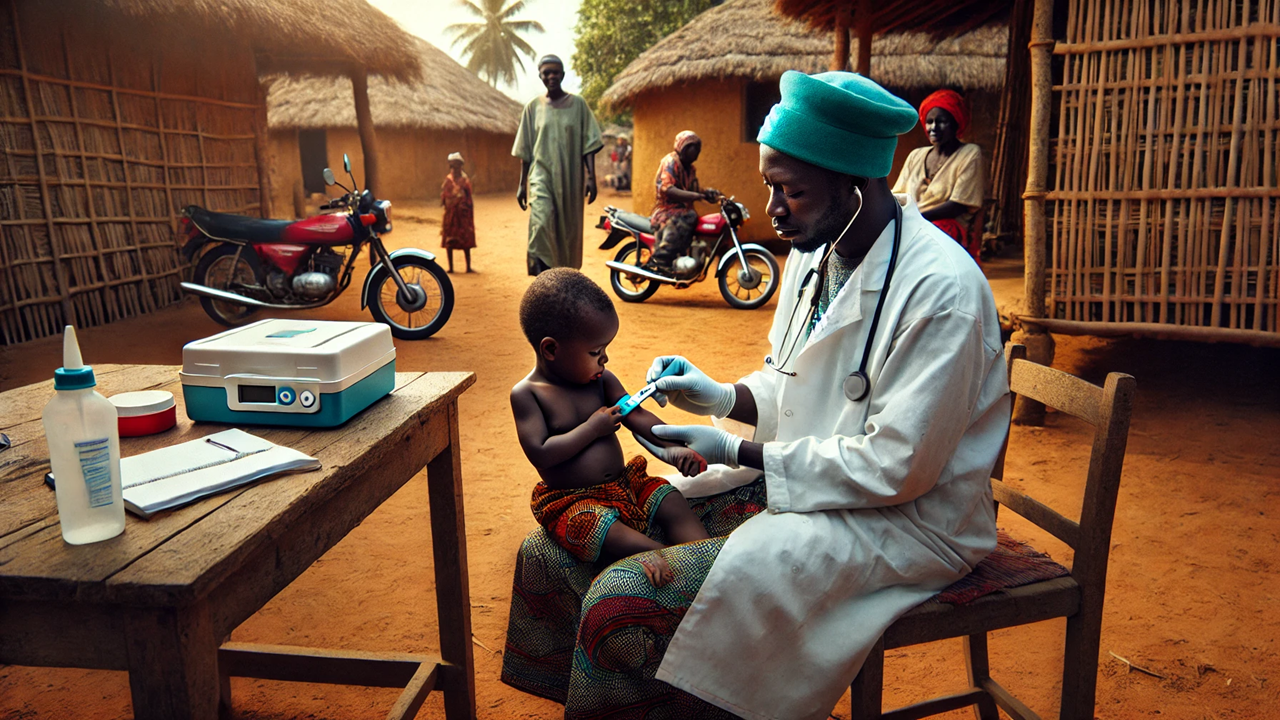
In a landmark development that could reshape the global fight against malaria, the World Health Organization (WHO) has announced the prequalification of the first-ever malaria treatment specifically designed for newborns and young infants weighing between two and five kilograms. The move, unveiled ahead of World Malaria Day, marks a critical step toward addressing one of the most neglected gaps in malaria care — the treatment of the youngest and most vulnerable patients.
The newly approved formulation of artemether-lumefantrine is tailored exclusively for infants under five kilograms, a group historically overlooked in drug development. Until now, healthcare providers have had to rely on scaled-down doses of medications intended for older children, increasing the risk of inaccurate dosing, adverse side effects, and potentially life-threatening toxicity.
WHO’s prequalification — a globally recognized benchmark ensuring that medicines meet stringent standards of quality, safety, and efficacy — opens the door for large-scale procurement by governments and international agencies. This is expected to dramatically expand access to safe, effective malaria treatment for an estimated 30 million babies born annually in malaria-endemic regions, particularly across sub-Saharan Africa.
“This is a historic milestone,” said Dr Tedros Adhanom Ghebreyesus, WHO Director-General. “For centuries, malaria has stolen children from their parents and hope from communities. Today, with innovations like infant-specific treatments, new vaccines, and advanced diagnostics, we are beginning to turn the tide. Ending malaria in our lifetime is no longer aspirational — it is achievable, but only if we sustain political will and financing.”
Closing a Critical Treatment Gap
Malaria remains one of the deadliest infectious diseases globally, with infants among the highest-risk groups due to their underdeveloped immunity. The absence of appropriately formulated medicines has long been a barrier to effective care. The new pediatric-specific formulation addresses this gap by providing:
-
Accurate, weight-specific dosing, reducing the risk of overdose or under-treatment
-
Improved safety profile, tailored to neonatal physiology
-
Ease of administration, critical for frontline health workers in low-resource settings
Public health experts say the innovation could significantly reduce infant mortality linked to malaria, particularly in rural and underserved areas where access to specialized care is limited.
New Diagnostics to Counter Emerging Threats
In a parallel announcement, WHO revealed the prequalification of three new rapid diagnostic tests (RDTs) designed to overcome a growing challenge in malaria detection — genetic mutations in the parasite that render standard tests ineffective.
Traditional RDTs for Plasmodium falciparum, the deadliest malaria parasite, detect a protein called HRP2. However, studies across 46 countries have confirmed the emergence of parasite strains lacking the gene responsible for this protein. As a result, infections go undetected, leading to delayed treatment and increased risk of severe disease and death.
The situation is particularly alarming in parts of the Horn of Africa, where up to 80% of malaria cases have reportedly been missed due to these genetic deletions.
The newly prequalified tests address this vulnerability by targeting an alternative protein, pf-LDH, which the parasite cannot easily eliminate. These next-generation diagnostics offer:
-
Higher detection accuracy, even in mutated parasite strains
-
Reduced false-negative results, ensuring timely treatment
-
Enhanced surveillance capability, supporting better disease tracking
WHO now recommends that countries transition to these alternative tests when more than 5% of cases are missed due to HRP2 gene deletions — a threshold already exceeded in several regions.
A Mixed Global Picture
The announcements come amid growing concern over stalled progress in malaria control. According to the World Malaria Report 2025, the disease caused an estimated 282 million cases and 610,000 deaths in 2024, marking an increase compared to the previous year.
Despite decades of progress, multiple threats are undermining gains, including:
-
Rising drug resistance to frontline antimalarials
-
Increasing insecticide resistance affecting mosquito control
-
Diagnostic failures due to parasite mutations
-
Declining international funding for malaria programs
Yet, there are also signs of hope. Since 2000, global efforts have prevented approximately 2.3 billion malaria infections and saved 14 million lives. Additionally:
-
47 countries have been certified malaria-free
-
37 countries reported fewer than 1,000 cases in 2024
-
25 countries are now rolling out malaria vaccines
-
84% of newly distributed mosquito nets are next-generation insecticide-treated nets
Innovation Driving Momentum
The introduction of infant-specific treatment and advanced diagnostics underscores a broader shift toward targeted, science-driven solutions in malaria control. Combined with vaccines, improved vector control tools, and digital surveillance systems, these innovations are helping redefine what is possible in global health.
The 2026 World Malaria Day theme — “Driven to End Malaria: Now We Can. Now We Must.” — reflects both urgency and opportunity. Experts emphasize that the tools to defeat malaria are increasingly within reach, but their impact will depend on sustained investment, coordinated action, and equitable access.
The Road Ahead
Public health leaders warn that without renewed commitment, recent gains could be reversed. The burden of malaria remains disproportionately concentrated in low-income regions, where fragile health systems and climate-related challenges exacerbate transmission.
The newly prequalified tools — both therapeutic and diagnostic — are expected to play a pivotal role in strengthening frontline responses, particularly in high-burden countries.
As global attention turns to World Malaria Day, the message from WHO is clear: innovation has created a pathway to elimination, but the window of opportunity must be seized now.


 Google News